
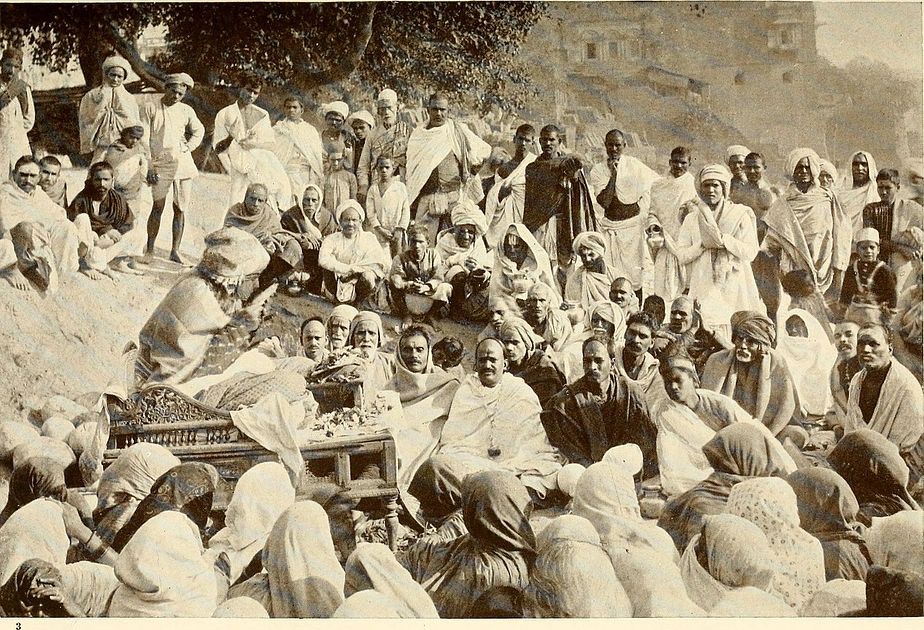
Mitochondrial DNA studies likewise support the hypothesis that the ancestors of the Chinese came to Asia from Africa. The M Haplogroup, a descendant of the African L3 Haplogroup, originated somewhere between Africa, India and Central Asia.
Video:
The “recent African origin” lineage of 70 kya diverged into identifiable East Asian and West Eurasian lineages by about 50 kya.
This early East Asian lineage, contributing outgoing from Mainland Southeast Asia significantly to the peopling of the Americas via Beringia about 25 kya.
The modern Mongoloid phenotype is estimated to have developed fully about 3500 years ago, somewhere in Central China. The previous Paleo-Mongoloid phenotypes of early East Asians became either replaced or prevailed among more geographically distant groups.
Genetic history of East Asians
Genetic history of East Asian peoples
This article explains the genetic makeup and population history of East Asian peoples and their connection to genetically related populations (i.e. Southeast Asians, Siberians, Polynesians, and Native Americans), as well as Oceanians and partly, Central Asians and South Asians, which are collectively referred to as “East Eurasians” in population genomics.
Americans?
Modern-day Native Americans share from 14 to 38 percent of their DNA with the Siberian hunter-gatherers — who are not closely related to East Asians — with the remainder coming from East Asian ancestors. Older Science: Most scientists have thought that the first Americans came only from the East Asian populations.
https://www.washingtonpost.com › …
Fossil study: Native American’s ancestry looked more Eurasian …
History of the San People: the ancestors of the Asians
Not related to the BaNtu tribes, the San are descendants of Early Stone Age ancestors. Clans and loosely connected family groups followed seasonal game migrations between mountain range and coastline. They made their homes in caves, under rocky overhangs or in temporary shelters.
India’s genetic History
The Indian population originated from three separate waves of migration from Africa, Iran and Central Asia.
First modern humans in Southeast Asia
Some scientists believe that Southeast Asians are the direct descendants of Homo erectus that migrated from Africa.—link
Harvard: Universityhttps://hms.harvard.edu Ancient DNA Reveals Asian Ancestry Introduced to East Africa.
Mar 29, 2023 — At a glance: Who were the people of the medieval Swahili civilization? Ancient DNA reveals African founders intermingled with migrants.
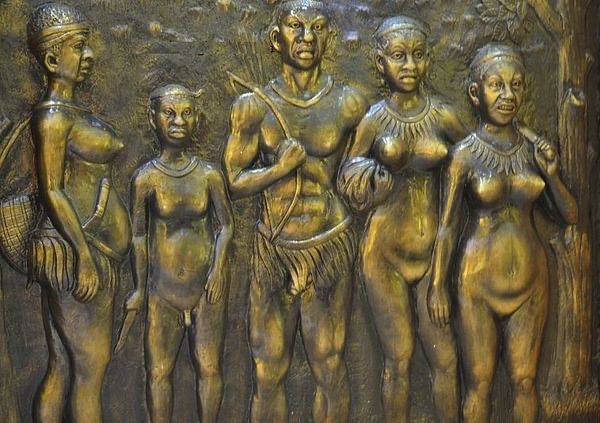
Origins
Aboriginal Indians. A significant portion of Indian DNA, almost half by some accounts, is derived from the aboriginal inhabitants of India, possibly descendants from the human populations that arrived there in the first waves of migration out of Africa.
In present-day India, the tribes of the Andaman islands, with a physiological profile most similar to modern Australian aborigines and New Guineans, are the taken to be the most representative of this ancient population, which has been labeled by geneticists as Ancient Ancestral South Indians.
(AASI), somewhat of a misnomer since this population is a major component of the DNA of all South Asians.
AASI DNA is particularly prominent in mitochondrial DNA (passed through the female line), indicating that there was consistent selective mixing between aboriginal women and high-status males from populations from outside of India, probably buoyed by innovative technologies such as agriculture and metallurgy.
Iranian Farmers. Much of the rest of Indian DNA comes from the Middle East, with some input from the Central Asian steppe. Originally, this genetic population was labeled Ancestral North Indian (ANI), since this genetic component is more prominent in North India. However, it is also a deliberate misnomer, chosen for political reasons so as not to offend Hindu nationalists, that obscures the non-Indian origin of these people. Humanity was much more diverse in terms of languages and physical features before the spread of agriculture and animal husbandry a few thousand years ago. For example, ancient Europeans had dark skin and blue eyes. But as a result of agriculture in the Near East and China, farmers fanned out from these regions, spread their languages, and displaced or assimilated the native populations of Europe, India, and Southeast Asia. Some farmers from western Iran, one of the homelands of agriculture, migrated east to the Indus Valley.
Iranian Farmers. Much of the rest of Indian DNA comes from the Middle East, with some input from the Central Asian steppe. Originally, this genetic population was labeled Ancestral North Indian (ANI), since this genetic component is more prominent in North India. However, it is also a deliberate misnomer, chosen for political reasons so as not to offend Hindu nationalists, that obscures the non-Indian origin of these people. Humanity was much more diverse in terms of languages and physical features before the spread of agriculture and animal husbandry a few thousand years ago. For example, ancient Europeans had dark skin and blue eyes. But as a result of agriculture in the Near East and China, farmers fanned out from these regions, spread their languages, and displaced or assimilated the native populations of Europe, India, and Southeast Asia. Some farmers from western Iran, one of the homelands of agriculture, migrated east to the Indus Valley.—-source/ https://thediplomat.com/2019/01/unraveled-where-indians-come-from-part-1/
Where Indians Come From, Part 2: Dravidians and Aryans
Who were the people who made up ancient India and where did they come from
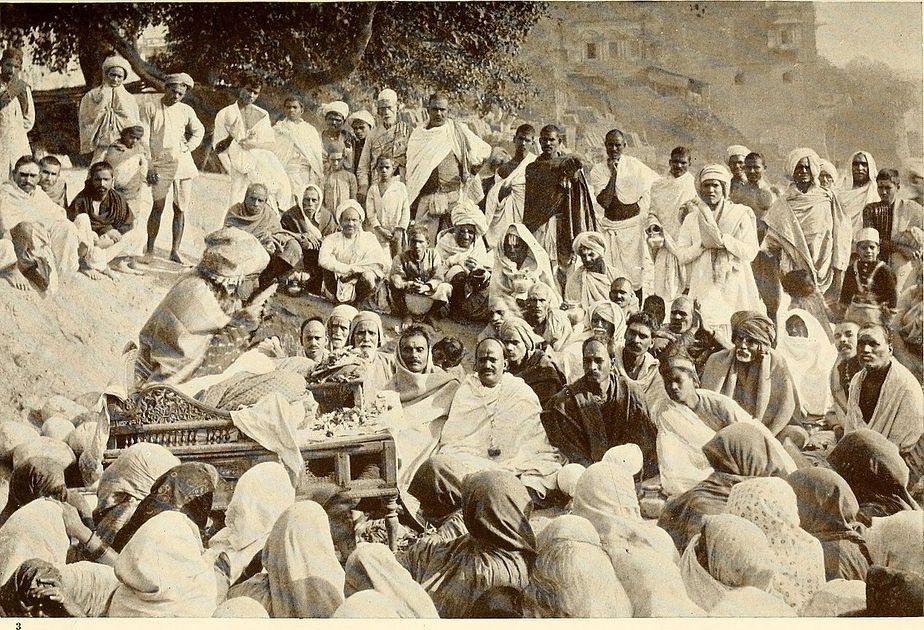
This is the second part of an ongoing series, which traces the origins of India’s people and civilization. The first part can be found here: Unraveled: Where Indians Come From.
As discussed in the first part of this series, around 5,000 years ago (3,000 BCE), India was on the verge of a major demographic transition, as new groups migrated to the subcontinent and mixed with the original inhabitants. The original inhabitants of the subcontinent, its aborigines, labeled by geneticists as Ancient Ancestral South Indians (AASI), lived throughout the subcontinent, but were soon to be partially assimilated into two demographic waves of farmers from the east and west: a larger group of Middle Eastern farmers expanding from what is now the northwestern part of the subcontinent, and a smaller group of Southeast Asian farmers from the east, whose demographic impact was minor, but whose crop — rice — transformed life in South Asia, because rice can be thrive in India’s climate much better than wheat. Soon, the final major contributor to the subcontinent’s ancient culture and demography, the steppe peoples, would arrive. The Indus Valley Civilization. Between 3,300 and 1,300 BCE, the urban, Indus Valley Civilization (IVC) thrived, mostly inhabited by communities of Iranian farmers somewhat mixed with aborigine Indians.
Two Ethiopia’s known in ancient times
The first Africa South/Egypt east of the Red Sea & The Second in India west of the Red Sea.
The major empire of the ancient world, the kingdom of Aksum arose in Ethiopia during the first century C.E. This wealthy African civilization. It is the second-most populous nation in Africa, bordered by Eritrea to the north, Djibouti to the northeast, Somalia to the southeast, Kenya to the south.
general history of Africa, II: Ancient civilizations of Africa
T h e n , to the east, w e would have had the Ethiopian highlands and the Horn of Africa that looks towards Arabia and the Indian Ocean.
Knowledge of farming filtered down from Egypt and Southwest Asia and the … Mean- while, the Bantu peoples of West Africa arrived, and two centers of …
Who Owns the Nile? Egypt, Sudan, and Ethiopia’s History-Changing Dam
In 3000 B.C.E., when the first Egyptian dynasty unified the lower and upper parts of the Nile River, there were no states in Eastern or Central Africa.
Category:Asian diaspora in Ethiopia
https://en.m.wikipedia.org/wiki/Category:Ethiopian_people_of_Asian_descent
Asian Ethiopians | Department of Linguistics
On the coast of this country still lives a primitive race which is dark brown (the Brahvî, but v. i.); so too, on the south-east corner of Arabia
comWest Asian sources of the Eurasian component in Ethiopians: a …
Dec 11, 2019 — S8). Overall, whole-genome sequences of all the Ethiopian populations appear closer to ancient broadly West Asian
https://www.sciencenews.org/article/malaria-outbreak-ethiopia-invasive-mosquito-asia
Additional reading, sources, notes
In terms of minority and indigenous representation, Ethiopia is a diverse … The Ethiopian census lists more than 90 distinct ethnic groups in the country.
Further reading:
Kozintsev 2020, p. 137-138: “The proportion of ANE in Native Americans amounts to 30–40 %.” “Likewise high (about 50%) is the proportion of ANE in Caucasoids, including the Yamnaya people, who inherited it from their ancestors—the so-called Eastern Hunter-Gatherers.” “As the geography and chronology of the ANE component show, it is misleading to describe it as Western Eurasian and associate it solely with ancient Caucasoids. To all appearances, it emerged before the Caucasoid-Mongoloid split. It was absent in Central and Western Europe before the Yamnaya expansion (Flegontov et al., 2016).
 Genetica Code

You must be logged in to post a comment.